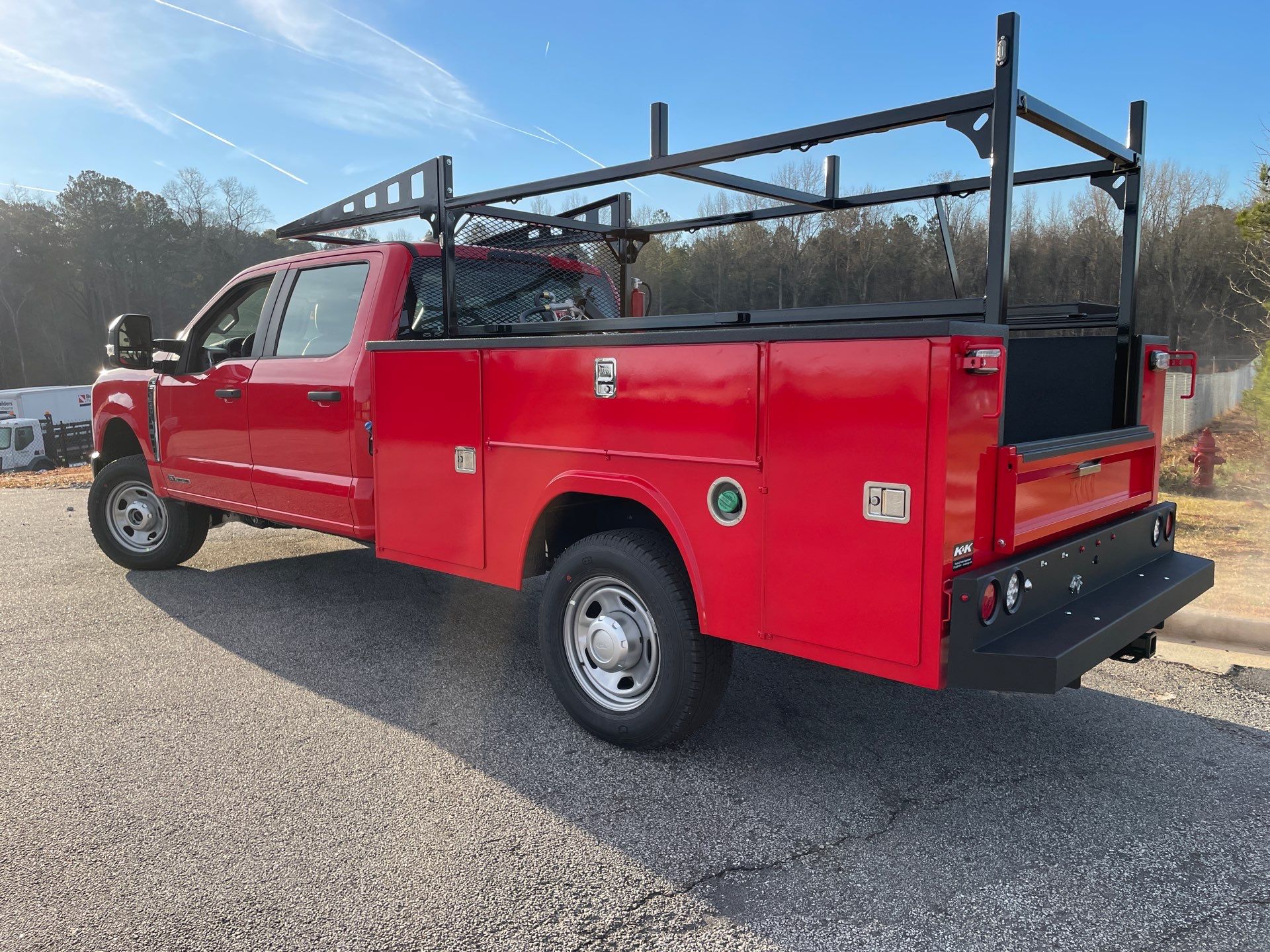
Service Truck Body Compartment Layouts: Which Configuration Fits Your Trade?
Choosing the right compartment arrangement starts with understanding what your trade carries and how those tools are used throughout the workday. Well-planned service truck bodies can separate hand tools, parts, supplies, and larger equipment so workers spend less time searching through mixed storage areas.
The best configuration is not necessarily the one with the greatest number of compartments. Instead, a useful layout considers tool dimensions, how often each tool is needed, available space, and the type of work performed. A thoughtfully arranged service body truck can make everyday equipment easier to locate while keeping storage suited to the vehicle and its intended workload.
What Should Determine Your Compartment Layout?
Begin by creating an inventory of everything normally transported to a jobsite. Divide those items into frequently used tools, small parts, bulky equipment, long items, and materials that require their own storage area. This exercise helps establish which equipment needs immediate access and which can occupy less prominent spaces.
When comparing service truck body compartment configurations, also consider the overall dimensions of the service body. Compartment height and depth influence what can reasonably fit inside, while body length and width affect the overall storage arrangement. Different service body models can have different dimensions, so matching the body to the chassis and equipment requirements is an important part of planning.
Weight distribution also deserves attention. Tools and supplies should be loaded in accordance with the vehicle and equipment manufacturers’ applicable weight ratings rather than simply filling every available compartment.
Which Layout Works for HVAC, Plumbing, and Electrical Work?
HVAC, plumbing, and electrical professionals often carry numerous small components alongside hand tools and larger job-specific equipment. For these trades, separating smaller supplies from larger tools can make identification and retrieval more efficient.
Drawers or divided storage areas may be useful for frequently accessed parts and tools. Longer compartments can be considered when equipment dimensions call for additional horizontal space. A ladder rack may also be relevant when ladders are routinely required for the work.
An effective service truck body layout by trade should reflect actual inventory rather than assumptions about an occupation. Two electrical contractors, for example, may carry substantially different equipment depending on the work they perform. Planning around the crew’s real tool list produces a more practical starting point.
What Should Contractors and Maintenance Crews Prioritize?
Contractors and maintenance crews may need to accommodate a broader mixture of hand tools, power tools, replacement parts, hardware, and larger equipment. In this situation, compartment variety can be particularly useful because equipment dimensions and access frequency may vary considerably.
Vertical compartments can provide accessible storage for appropriate tools and supplies, while horizontal areas may suit longer items. Drawer systems can help separate smaller equipment, while top-side storage can provide additional accessible space when the selected body design allows it.
The goal is not to assign every compartment immediately. Leaving appropriate flexibility can be useful when job requirements change, or crews need to carry different equipment from one assignment to another.
How Can Utility and Municipal Crews Plan Storage?
Utility and municipal work can involve varied field assignments, so the layout should be based on the tools and materials required for the vehicle’s specific role. Frequently handled equipment should generally be positioned in easily accessible areas so workers can retrieve it conveniently without having to move unrelated items.
Among practical service truck body organization ideas, grouping equipment according to task can make storage easier to understand. Inspection tools can occupy one area, routine hand tools another, and less frequently used supplies a separate compartment.
This approach gives each storage area a defined purpose instead of treating the entire body as general cargo space. Where additional security is desired, available locking options should also be evaluated as part of the overall body specification.
Which Available Storage Features Can Shape a Layout?
Different accessories can change how a service body functions. Available options may include top-side toolboxes, drawer systems, long horizontal compartments, flip-top compartments, front compartments, pull-out bed slides, enclosed tops, and ladder racks.
Rather than adding features simply because they are available, consider what problem each option solves. Options such as drawer systems and pull-out bed slides provide different ways to configure available storage space. Ladder racks address another distinct storage requirement.
The most useful service truck bodies combine suitable dimensions with storage choices that reflect daily work. Published models also vary between single rear wheel chassis and chassis with two rear wheels on each side, making chassis compatibility another important consideration when evaluating a body.
Questions to Ask Before Choosing Your Layout
Before finalizing a service body truck, ask where the most frequently used tools will go, whether oversized equipment fits the proposed compartments, and how easily workers can reach essential items. Consider whether future assignments could change the equipment normally carried.
A layout planned around these questions is more meaningful than choosing compartments solely by appearance. It connects storage decisions to actual field requirements and helps create a truck setup suited to the trade it supports.
Configure Your Service Body Around Real Work Needs
At K & K Manufacturing, we serve industries including contractors, utilities, municipal operations, landscaping, agriculture, and HVAC, plumbing, and electrical work. Our available service body options include C-Tech drawer systems, top-side toolboxes, long horizontal and flip-top compartments, pull-out bed slides, enclosed tops, and ladder racks, allowing customers to select storage features based on their equipment and work requirements.
Contact us today to discuss available service body models and configuration options for your work truck.